
NXP 74LVC138ADB: A 3-to-8 Line Decoder/Demultiplexer for High-Performance Digital Systems
In the realm of digital circuit design, efficient data routing and signal selection are fundamental. The NXP 74LVC138ADB stands as a pivotal component in this space, a high-performance 3-to-8 line decoder/demultiplexer engineered to address these exact needs. This integrated circuit is a workhorse for memory address decoding, peripheral selection, and general-purpose logic demultiplexing in a vast array of applications.
The core function of the 74LVC138ADB is to take a 3-bit binary input (pins A0, A1, A2) and activate one of its eight mutually exclusive active-low outputs (Y0 to Y7) based on that value. This simple yet powerful operation allows a system to decode a small number of control lines into a wider selection of enable signals. Furthermore, it can operate as a demultiplexer, routing a signal applied to a single input (using one of the enable pins) to one of the eight output channels.
A key to its versatility lies in its three enable inputs (E1, E2, E3). These inputs provide a gate function, ensuring the device is active only when E1 and E2 are low and E3 is high. This feature is crucial for easy expansion into larger systems, allowing multiple decoders to be cascaded together to form, for example, a 4-to-16 or even a 5-to-32 decoder without additional logic gates.
The "LVC" in its name denotes its membership in NXP's Low Voltage CMOS family, which is a significant advantage for modern designs. It operates across a broad voltage range from 1.65 V to 3.6 V, making it perfectly suited for interfacing in low-voltage systems and providing a robust bridge between processors running at different voltage levels. Despite its low-voltage operation, it offers high noise immunity and can sustain relatively high-speed operation, with propagation delays typically in the single-digit nanosecond range.
The device is also designed with power efficiency in mind, a critical consideration for portable and battery-operated electronics. Its CMOS technology ensures very low static power consumption. The DB (SSOP) package offers a compact footprint, which is ideal for space-constrained PCB layouts.
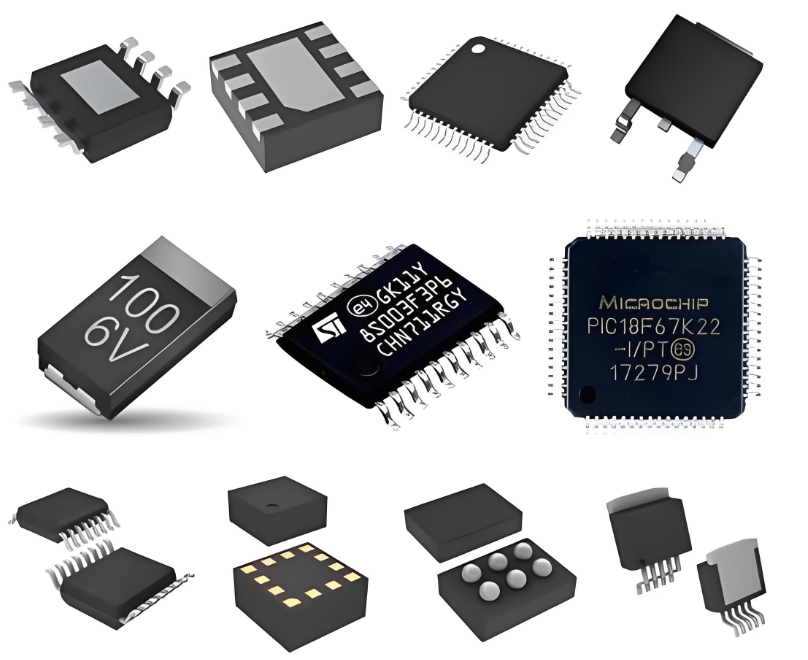
Typical applications are extensive, including:
Selecting one of multiple memory chips (RAM, ROM) or I/O devices in microprocessor-based systems.
Demultiplexing data signals to different subsystems.
Implementing complex logic functions and generating timing signals.
Serving as a fundamental building block in digital multiplexing systems.
ICGOODFIND: The NXP 74LVC138ADB is an indispensable component for modern digital design, offering a reliable, versatile, and efficient solution for decoding and demultiplexing tasks. Its combination of wide voltage range, high-speed performance, low power consumption, and cascadable design makes it a superior choice for engineers developing high-performance digital systems, from consumer electronics to industrial controllers.
Keywords: Decoder/Demultiplexer, Low-Voltage CMOS (LVC), Memory Address Decoding, Enable Inputs, High Noise Immunity.

